Category Archives: Interviews

A Conversation with Randy Kaplan

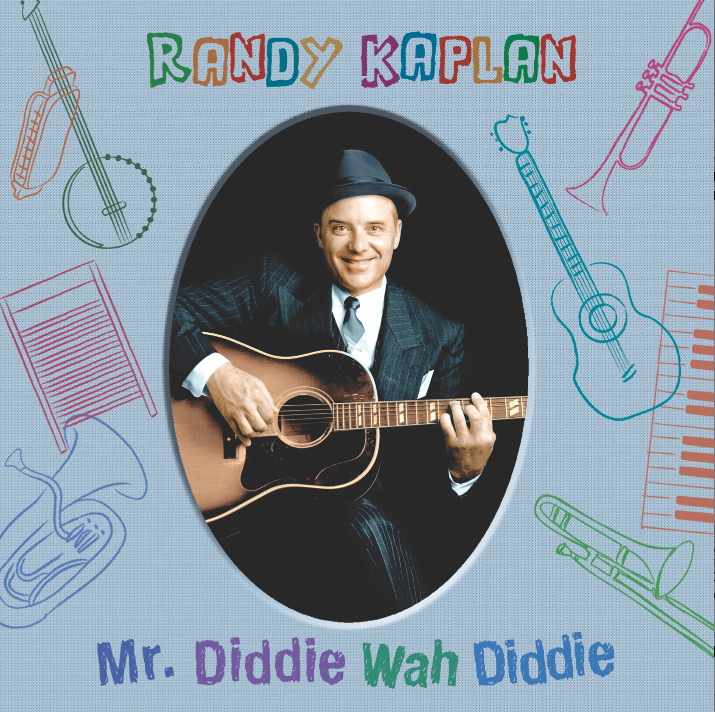
Randy Kaplan is new school with tip of the hat to the old school. Actually, he’s fully immersed in old school blues. Randy’s gift lies in sharing the blues, yet telling a story the kids can connect to. He doesn’t take shortcuts or cut corners. His latest album, Mr. Diddie Wah Diddie is 24(!) tracks long and comes with a 20(!) page CD insert. Considering the attention span of most children, it’s daring to release an album of that length.

Randy and his team have just also launched, The Ice Cream game a fun computer game that you can play with your children.

Mr. Kaplan was kind enough to take time out of his schedule to talk about the business side of the kids music scene.

How did your relationship with the My Kazoo TV people to release this album compared to how you were with your three previous records?

Richard Ellis and I had been meeting on and off for a few years. The beginnings are murky.  I don’t remember where he first saw me.  He must have seen me perform in New York somewhere, because that’s where we kept meeting.  And he kept telling me about his MyKazooTV and MyKazooMusic when it was in its incipient stages.  And he said they were working on a deal with a major label and he definitely wanted me to work with them.  And you know it was something we…it was just on the back burner.  I just kept releasing albums independently and then he finally…we met and he said look, I got a deal with Universal and we want to sign you.  So, that’s how it came about.  Then we got serious about figuring out a way to work together and…and so far, so good.

Was there a sense of relief having the label support behind it rather than having you having to do a majority of the legwork on your own?

Yeah, it’s interesting because overall I’m very excited to be with Kazoo who, you know it’s also Universal Music, but it’s definitely a mixed bag in the sense that I…I never was happy with self promotion or doing all the business end of stuff, but being forced into for my three kid’s records, I think have eight or nine adult records out and I’ve had to do all that stuff totally independently.  Grass roots, do it yourself, all that stuff.  And I….I never liked it, but I always was the one who was in control, and I kind of got used to that.  So now, you know with other people that have serious input, it’s…it takes a lot, you know whether it’s ego wise or just creative wise to be like OK, I have to consider these other things, but ultimately it’s definitely a relief that I…that I have this team behind me.  You know that is in constant email contact me and you know has concerns with the artwork, and the songs and everything.  And so, ultimately, it’s good, but there is like that part of me that’s…you know it’s hard to…it’s hard not to be the one that does everything.

Right. You go from being in control of absolutely everything to not being in control of absolutely everything.

Right.  Which is kind of what I always wanted.  I wanted help in the business end, especially.  And the good thing about this is that this first project we worked on was like definitely not like how you’d….how you’d put on…you know you wouldn’t design this project in advance to be the one to work on because it’s like a total concept album with…it’s really long, and there’s tons of licensing clearance issues.  And I’m sure they were like what the heck do we have to…this is Randy’s first thing he’s giving us.  But I got everything I wanted on the record, the audio, and the artwork and everything is exactly how I wanted it. I couldn’t be happier with that.

Now, do you think you were able to, knowing that the business was going to be taken care of, did it allow you to focus in on the music 100%?

Yeah, now what I said is, we wouldn’t have chosen this project.  The project was already in midstream when I signed on with MyKazoo.  So, I had already done the bulk of the recoding and it was almost…and the artwork was kind of just starting to be made.  So it was…most of the creative work was done when I signed.  Then of course…except for the artwork took a long time, because it’s a 20 page booklet with photos, and liner notes, and everything.  So, I just had to fight a little to get the exact…you know they wanted me to cut some songs maybe, or they were concerned with the length, and you know that took a little finagling.  But I got it.  So, yes, I kept saying look, for our second record together, I’ll do a ten song record of all originals, no licensing, no covers, whatever you want you know.  So it worked out.  It’s like a bargaining chip, options for the future.

Right, because when this album came to me, I’ve only been paying attention to children’s music for about the last two years or so.  And every kid’s album I’ve seen, it’s maybe ten, eleven, a max of 12 tracks.  And you practically doubled that with this one.  Was there ever any thought to say let’s do half of one album.  Let’s do 12 tracks for one here, and then 12 tracks for a second album one year later because maybe the audiences and the kids aren’t ready or the parents aren’t capable of sitting down and listening to a 24 track record with their kids?

Right.  Well, I was very passionate that it had to be this way. And my first three albums were 17 track records, and there’s some really long songs in there like my version of ‘You Can’t Always Get What You Want’ is ten minutes, and it’s never a problem.  Kids listen to the whole thing and sit there.  And I’m like wow, they have better attention spans than the adults sometimes.  But my argument, first, it’s like a concept record.  So, I wanted all my guitar heroes to be represented.  You know there’s a few I had to leave out, but it’s also a concept record in that I am doing dialogues throughout teaching blues history and trying to come up with the a blues man name for me.  And so you know so once that was set, you couldn’t really cut out songs.  They were like, look, especially for a kid’s record, how could it be this long?  And I said well, for a kid’s record especially, it doesn’t really matter how long it is, because in my experience the family gets in the car, puts on the CD and the kid gets fixated on maybe song three and wants to hear it over and over again.  They don’t even get to the second half of the record for three months.  You know and then they have a wealth of material at their disposal for a year’s worth of entertainment.  I really feel like how it is.  Like my other records, you hear first the praise for the first half of the record, then later oh, we just listened to this one, song number ten.  You know so it comes around like that. It’s not like you’re a teenager coming home with headphones, and sitting on your beanbag chair, and listening to the entire record and reading the liner notes.  These are, three to eight year olds in a car, mostly.  This is how I imagine them listening to it.  So, I felt the length was kind of an irrelevant issue.  It seemed like it would be like a major thing.  Like oh, kid’s records should be short. It really seemed logical when you actually examined it.

Exactly. We’re in the car and maybe five tracks into a record before we’re at the store and that’s all they want to hear when we get back in. Those first 5 songs. I can always tell if it’s a good album if they say “again.”

Right.  Exactly.

If they say again when the song over, that means they’re loving this, and we go back and we listen to that song five consecutive times.

Exactly.  Yeah.  And with that I mind too, I try to design my music, and I hope I succeed at it, in like having the adults be able to listen to the same song five times in a row without wanting to tear their hair out. Sometimes any song you want, if you have to listen it over and over again, you’re like oh, come on.  So, I try to put as many levels as I can in there, where the kids aren’t going to get every joke necessarily, or every word play thing where adults will. The song will hopefully hold interest for adults as well as the kids with the repeated listenings.

“Ice Cream Man Rag” by Randy Kaplan from myKaZooTV on Vimeo.

Now one of the things you’ve talked about is the liner notes.  And to me that almost seems to be a lost art nowadays. Where so many people are just downloading the album via iTunes or Amazon or CD Baby or wherever.  It’s always just the MP3.  So why did you take the time to put together such a unique, and informative package to go with the actual hard copy CD?

I’m like an old time, old style guy, too.  I lament the loss of the big LP where you could hold it in your hand, and the pictures are much bigger, and then at least with the CDs, with the CD booklet, I lament the loss of that.  With kid’s music especially, I feel like the physical CDs are bought often.  I don’t know how many people actually read the liner notes, and as extensively as I‘d want them to from my other records. The first three records have short liner notes, but they get increasingly longer, you know where by my third one I was doing a liner note for my last adult record.  Songs For Old Lovers I did…there are extensive liner notes in the style of like a Frank Sinatra record from the ‘50s or ‘60s.  So that got appreciated.  So, that was a concept record, too, my last adult record, which was I wrote songs as responsive to pop songs from the ‘40s and ‘50s, like Sinatra-eseque, Peggy Lee type songs.  So, there were liner notes in that.  So for this I wanted to do the same thing, and I’m real…I was real passionate about it and loved putting the packaging together, and my hope is that some people will read it and maybe I will post it online for the folks that like to just download stuff from MP3’s.  We’re trying to show with this record that it’s a…it’s kind of a educational in a way, because I’m not really an educational type singer where you go to the show to learn something, but you know we have this amazing heritage of music in the United States of which blues is a huge part.  So, I’ve been into the blues and ragtime music for a long time, but just putting together this record, and doing all the licensing, and researching the songs, I learned a ton of stuff. I find it fascinating.  So, I just hope that it will wear off…rub off on other people and they’ll find it fascinating too.  You know we have these mythological American characters, Robert Johnson, and those guys who we hardly know anything about. And these guys formed American music.  You know everything was influenced by them.  Just magical, magical guys in our past hundreds…hundreds of years ago.

You don’t seem to take the easy route on a lot of these things.  You kind of dig in and make this really authentic and allow both the parents and the kids to really kind of dig deep, don’t you?

Yeah. I try to do it so that it’s both entertaining, and then if you want to go to that level of saying oh, what is he really doing, you could find out.  You know I would have loved to have like a companion CD go with this where it shows all the influences, because for Mr. Diddie Wah Diddie, I took Robert Johnson’s song, for instance, ‘Kind Hearted Woman Blues’ and changed it to ‘Kind Hearted Babysitter Blues.’  So, I made a CD for my friend Scott, who is also what I built in as my creative consultant, because he just has so many amazing ideas.  It was his idea originally to put…you know get Lightning Boskins to sit there with me and talk about the song.  So, I made him a CD.  It was a double CD, it turned out to be, because I staggered the original influences with like my…my songs, how they came out.  He was like “oh, this is the best.  I wish I everyone could hear this.”  So you hear like Robert Johnson singing ‘Kind Hearted Woman Blues’, then me singing ‘Kind Hearted Babysitter Blues.’  You hear Bessy Smith singing ‘Black Mountain Blues,’ then my version.  So, that kind of stuff I always hope people you know read the liner notes and want to hear the originals too, because you know that the lyrics aren’t always appropriate for kids, which is why I wanted to change everything and put out a blues record for children.  But still that’s just amazing, these original versions.  So yeah, never the easy way out. That’s true.

I’m curious how easy is it to turn off the adult record writing and write for the kids?  Do you find it bleeding over at all or is it pretty cut and dry with how the songwriting process goes for you?

I don’t really think about it. I know certain songs of mine started out as adult songs that I just…that changed to kid’s songs real easily.  For instance, Loquat Rooftop, you know my second kid’s record.  That was not a kid’s song.  It was an adult song.  I didn’t change anything.  I made it a kid’s song and I just said, oh, I will change it out…instead of saying loquat, I’ll say, lo, lo, loquat in the chorus.  That’s the only change in the whole song, and it’s some people’s favorite song.  It’s like a sweet, nice song.  My friend Mike West, he’s also the producer, just illustrated a children’s book about it.  So, it’s like that’s…something like that. Or my song ‘Roaches’ from my first record, Five Cent Piece.  You know it’s about roaches.  It was just a song I used to sing when I lived in the East Village.  People like totally related to it because everyone had roaches in the East Village apartments in those days.  And then I just changed it to a kid’s song by adding the voice of the roaches during the instrumental.  And it…you know so stuff like that of course is a difference.  I…you know my adult songs that I have written in the past 20 years are all about kind of dysfunctional relationships and (laughs) for kids.  But yeah, the kid’s songs for instance, my friend had like a little salon party a few weeks ago, and she asked me to be one of the people who performed.  So I play a couple of my more funny songs. Also the kid’s songs wind up informing my adult music, where my adult shows now, which are however few and far between, are kind of fun, and funnier than they ever used to be because I…I’ve just learned from singing for kids what…what is an entertaining thing, and what is fun to play.  So, anyway, I played my two adult songs, and then Laurie, the person who did the party, said oh, you should play them one of your upcoming kid’s songs from the blues record.  And I did and that was the biggest hit of the night for me.  Like they wanted to hear more kid’s songs.  You know because there’s a level in the kid’s songs that the adults like, too.  So, it does kind of blend in a way where I’m writing with you know multi levels going on.  So, I still do write some songs, and I’m like oh, I could never sing this for kids, but for the most part nowadays, I’m writing for a children’s audience with adults in mind also.

It’s hard for artists to make money via the CD sales route.  There is revenue there but there’s always that break even point where it costs so much money to produce the records, and things along those lines, where a majority of revenue for artists come via shows, and gigs…are you able to make the kid’s aspect of your career, is it enough to where you are comfortable and you can make a living off of? I’ve only seen that you have a couple summer tour dates this year, not a whole lot of live shows.

Right.

So how do you as an artist find a way to justify the time, the effort, the energy to make it financially, not necessarily successful, you don’t have cash flowing all over the place, but to make it worth that time and effort?

Well, the majority of my income comes from royalties. I’m really lucky in that the Sirius XM radio, plays my stuff all the time.  And you get royalties from that, from ASCAP, which is my song writing and composer society that I belong to, but also from Sound Exchange, which pays royalties for both the sound recordings, sound recording owner and also to the main performer of songs.  So, now my Sound Exchange royalties are going to go down with My Kazoo, because My Kazoo and Universal now own the sound recording of this new record.  But I am still the principle recorder, recording artist, so I’ll get the Sound Exchange royalties, and of course, I’ll get the ASCAP royalties.  So, that’s actually my main source of income these days.  And live shows, I’m assuming there will be more coming up, but I try to do ones that you know pay relatively well.  You know I used to just go all over the place and play for basically nothing.  And I know everyone argues just do the show, it’s good for exposure. You know so those days are kind of luckily coming to an end, where now I can say well, yeah, I’ll go and play anywhere.  You know people write me, “when are you coming to Texas?”  I’m like I’m ready to go right now.  It’s easy to get me to come.  Even if it’s like a private thing, you pool together ten families and each chip in and then that’s enough to get me to fly anywhere and put me up in a hotel.  It’s kind of easy.  So, luckily, my New York contacts and my L.A. contacts, the two main places I lived and played, I have certain gigs that happen a couple of times a year, which actually pay pretty well.  But yeah, I fly to Denver, St. Louis and those places, do what I just said.  They say hey, we want to sponsor a concert. They just offer me and we make a deal.  Like alright, give me this amount of money for flying, and for putting me in a hotel, and then I’ll come out there and I’ll play, and so far it’s been great. I’m hoping that will increase.  And also, definitely what you mentioned, when I was single, it was easy to eek out an existence and squeak by.  Now I have a wife have a kid, and (laughter) it’s way more expensive than I thought it was.  So, yeah, we’ve got to step up things to the next level with MyKazoo and Universal, hopefully, so we can keep this viable.

For more information on Randy visit RandyKaplan.com and don’t forget to pick up a copy of his newest album Mr Diddie Wah Diddie.

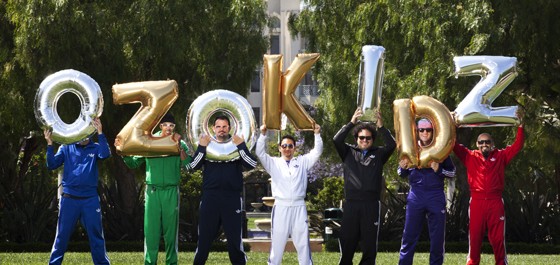
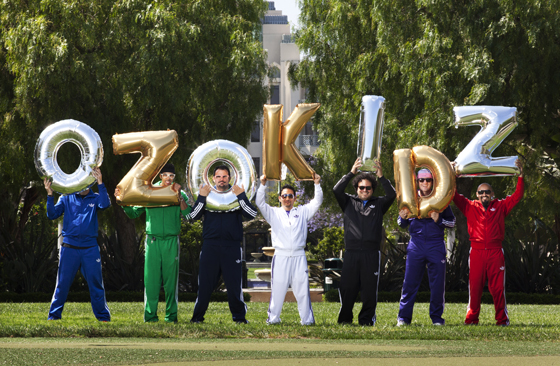
A conversation with Jiro Yamaguchi of OzoKidz

After 15 years of enjoying a devoted following, Ozomatli knew it was time for a change when they couldn’t give away tickets to some of their fans. But they could to their kids.

On September 25th, the Grammy-winning band will release its first full length kids album, OzoKidz. This follows a few years of dabbling in side projects such as recording for PBS Kids and the Happy Feet II soundtrack.

I spoke with Ozomatli percussionist Jiro Yamaguchi about his kids musical inspiration, the similarities between playing for kids and adults, and why it’s necessary for them to diversify their sound.

Why a kids album? Why now?

We decided to start doing kids shows at first because we realized that a lot of our fans were having kids. We would do a show on a Wednesday night, and normally in the past we could pack a house. Four years ago and were noticing that people weren’t coming. We put a message out there on Facebook to have an unlimited guest list, and we got responses that we’d get was “We can’t, we have kids.” So a light bulb went off, we were getting older and our fans were too. They were having kids and needed sitters. We just started adapting our old music for children. That’s kind of how it started. And then coincidentally we got these recording gigs for PBS Kids were they wanted us to do 30 second bumper music with a theme — one was on opposable thumbs, one were for mesasurement. Several of those. They made videos with them. And then we had the opportunity to do the entire music for the Happy Feet II video game. They approached us and gave us a list of 30 different songs, everything from “Funkytown” to Harry Belafonte. We went into the studio and did it and it was great. It kind of developed our chops for recording kids music. It was really freeing and it was a lot of fun. So the next steop was to make our own record.

Before you dove head first into Ozokids, did you realize there was sort of a independent cool kids music scene?

I have a duaghter who is 4 now, so I’ve been aware of it, but even before that I had heard of people like Dan Zanes and They Might Be Giants. I became more aware of it once I had my own daughter. I think we’re going to fit right in with that team and offer something a little bit different as well.

Who are some of the artists you looked towards for inspiration?

They Might Be Giants stuff was really inspiring to me. I could listen to it myself and enjoy it as well as my daughter, and that kind of helped me. There was other kids music, and I would say, really, do we have to listen to this? It was not relatable to me. I was like, Oh we need to make music that transcends age — from something really young to adults can listen to. I think our music does anyway. Even if we’re not doing kids music per say, I think it’s broad appeal.

What was the music/band/artist that inspired you to pick up an instrument as a child? Is that your hope with this record, inspiring children to pick up instruments?

I listened to a lot of different stuff from classic rock to punk to jazz. Some of the jazz I listened to as a teenager was mind opening and broadening. It’s kind of like an education without going to school. Later percusionist Zakir Hussain and Prithiraj Chowdhury inspired me to go back to school and study Indian drumming and world music drumming and percussion. I don’t know if our intention was necessarily to get kids to pick up an instrument, but if that’s something that inspires someone picks up, that a great bonus. There are some kids who always come to our Los Angeles shows with Brazilian hand percussion, using the same model that we use and have an Ozo logo on it. It’s kind of cool to see children pick up those things. They are looking at us and saying, let me try that. If that can lead something — music or not — that’s great.

Is there a formula or process to take your sound and make it for kids?

We have a little more freedom when making for kids. There’s a certain amount of freedom to do songs we wouldn’t with Ozomatli. It’s more of a fun element.

Was the song writing process the same, but just with lyrics for kids?

The process is pretty similar. Everyone brings in their own subject matter and ideas. It’s a pretty easy process in terms of what we want to do. That’s a really great place to be when you’re creating in the studio.

You’re back in the studio recording an adult record. Has it been difficult to change the writing process?

Not at all! We’re in pre-production for an Ozomatli record, and I think it actually helps the creative process because our juices are flowing. When you get back in the studio, it’s not hard to switch gears at all, and if anything it helps to keep grease the wheels.

Do you play songs for your kids first to get approval?

We don’t do it to get approval, and most of the songs we haven’t played live yet. A few of the cuts on the album — like “Sun And Moon” and “Piraña” — we were playing before we were recording. I think we work backwards that way. We make them first, then see what works live. The ones that don’t work as much live fall back, and the ones that do rise to the top. This goes for our Ozomatli records too.

Was there a thought of expanding the 4 60-second songs from PBS kids into full songs?

Those were kind of appetizers and one-offs, but we have played some of them live. We could work them into our live set.

Do you find those songs get more recognition?

It’s hard to tell because we’re such a high-energy band and we just want kids to do something on each song to get moving, so I’m not sure if there is a recognition factor.

Little bit different than an adult crowd, then.

Totally different. Well, but now that I say that, maybe it’s different in that the attention spans are a little bit shorter, but what I did notice is, you know what, this is just little people. But they react in the same way that adults do. Underneath it all it’s all the same thing.

Seem to wrote songs from an educational perspective rather then from the eyes of a child, was that done on purpose?

I think that partly came from the PBS kind of thinking. I think that came fromthe process of writing a song on a theme. We just wanted a balance, we wanted songs that are.

The record industry so much different and less stable than it was when you started, was that a motivating factor in this new evolution? 

I think it’s kind of necessary. The more diverse in what we can do, the better it is for our band. Having a whole branch of Ozo kids being a completely seperate entity would be a great thing for us. The more things that we have as a band, the better. Whether that’s making music for movies, commercials, movies, while playing kids shows, all those things combined are good for us and the longevity of our band in the way the music business is right now. We’ve been a band for 18 years, and I think part of that is the reason to adapt and not rely on the industry. When we first started, we recorded on tape and pro-tools were just coming out, there wasn’t anything like a 360 deal, Tower Records was still in business, and we’ve seen a lot of changes. Our ability to diversify and do other things has helped us survive, and we’ll keep doing that.

Listen and download the track ‘Trees’ for free! (only until 9/3)

You can now preorder the album at Itunes or Amazon.

A Conversation with Dean Jones of Dog on Fleas

The music of Dean Jones and Dog on Fleas has been a constant presence at Dadnabbit HQ ever since my daughter (who’s currently a proud six and a half) was very small. As you’re no doubt aware if you’ve read the site for any length of time, I’m a big fan — not only of Dean and the Fleas’ songs, but their warm, quirky production aesthetic, a style that lets the music breathe while making room for all kinds of unexpected stuff.

Dog on Fleas’ new LP, Invisible Friends, includes everything I’ve come to expect from Dean and the band — exotic instruments, lyrics that are laugh-out-loud funny one moment and heartbreakingly tender the next, instantly hummable hooks, rock-solid arrangements with deceptive depth — while demonstrating that they’re still growing as songwriters and recording artists. Basically what I’m saying is that Invisible Friends is their best record yet, but don’t take my word for it; enjoy some of the videos embedded in our chat below.

Between your solo career and all the music you help create for other artists, I feel like you’re probably writing constantly. What’s the writing process like for Dog on Fleas? Is it more democratic, or is everyone off starting songs on their own before they bring them to the group?

I guess it’s mostly me writing stuff. I’m trying to get [bassist/guitarist/singer] John Hughes to write more. [Laughs] He’ll bring in something great and then say it isn’t quite done. We work on stuff a lot.

What about you as a writer? Are you the type of guy who punches in every morning, or do you just wait for inspiration to strike?

Here’s my philosophy: I’m kind of all or nothing. The window is either open or closed. For instance, when Invisible Friends was done, I had no time to write, because I was working on everything else — so to get that window open again, it takes a little bit of work. And then once it’s open again, I’m writing three or four songs a day. I actually carry a little recorder around with me at all times, just in case I stumble over a little idea, and then I don’t listen to it for months.

I feel like this kind of thing is probably common for a lot of artists. You have to write a lot of crappy songs to write a good one, you know? I’ll write songs I don’t even think are really all that good, just to exercise my songwriting muscle.

I’m always curious about the answer to that question, because I’ve known artists who don’t write unless they’re working on an album, and I’ve known others who treat songwriting like a day-to-day job.

Yeah, I hear artists like…you know, John Hiatt. I hear him on the radio, and I’m like, man, that guy gets up at 9 o’clock, he has a cup of tea, and he has a song written by 10. Cut it out, man — I’m so sick of him. And there are a lot of people like that, who seem like they just write a song at a certain time of day, and it doesn’t seem like anything to me. Just pumping it out — Hiatt can write a song in 10 minutes. You can tell they were written during “songwriting time.” I feel like my best songs come when I’m in the car or on a bicycle, and I have to pull over to grab them.

I feel like a lot of the best creativity happens almost by accident, and usually while your brain is occupied doing something else.

Right. Yeah, for me, it’s the bike. It’ll hit me in a field or something. I’m serious — I just drove to a gig the other day, and I wrote four songs on the way to the gig. One came and I was like, “Hey, that’s amazing! I just wrote a song!” Ten minutes later, another one popped up. I don’t know how they are yet, but… [Laughs]

You’re probably at an advantage in the kindiesphere, because a lot of artists have to take day jobs that don’t have anything to do with music…

Yeah.

Whereas running No Parking Studio allows you to marinate in other artists’ music a lot. I feel like that has to have a profound effect on your creative process.

I love it. Even if I’m working with a song I don’t love, I’m going to be able to bring my creativity to it. If the artist gives me a little bit of leeway with it, I’ll take it. And in the kindie world, there are a lot of people seeking me out as a producer, which is really cool. I actually have to worry about whether the Dog on Fleas record is going to cut into the Okee Dokee Brothers album, you know?

How do you think your production career has impacted Dog on Fleas as a band? I’m sure it’s had an effect on scheduling, but I’m also interested in hearing how working with other musicians has helped color you as an artist.

I don’t know. I’ve been doing other records for people for awhile. Invisible Friends definitely would have been finished sooner if I hadn’t been working on other people’s records, but I think we’re probably the same. I’ll tell you, the Okee Dokee Brothers were really interested in pre-production, and I appreciate that, although I’m not sure we’ve really gotten into it with the Fleas. I mean, it’s my studio, so we can just spend the night and record a song, and if it doesn’t work, we can throw it out and start again.

I really love the job you did on that Okee Dokees record. The production is pretty involved, but you won’t notice unless you’re really paying attention. It breathes.

I don’t owe the musicians anything. It’s the song, you know? I remember reading something about how Tom Waits talks to his songs. He’ll be sitting in the corner, asking them what they want him to do. I love that — you can go in so many directions, and that was the case with the Okee Dokee Brothers. They’d hear something and say it was cool, but they knew there was something else that was still waiting to be done.

What’s the tracking process like for Dog on Fleas? Your sound is very live, but I know plenty of overdubs are involved.

We have our routine. We’re always in the room together. There are overdubs and stuff, but if I’m playing guitar, it’s guitar-bass-drums, and we’re all in a room. Maybe the amplifier is upstairs, so there isn’t any bleed. On the new record, the vocals were redone for most songs, but there are a few that were live. We’re definitely always playing three instruments live and overdubbing the rest.

So start to finish, how long did it take to record Invisible Friends?

That’s a tough question. It was actually a different album at one point — like three years ago. The songs wanted to live together, you know? It took on a different quality at some point and shifted the songs in a new direction.

It takes a certain amount of bravery to listen to that — to lose those other songs along the way.

It’s hard to throw out a song. I’m arguing with the guys in the band, and arguing with myself — but ultimately, every song on this record is talking about a little world. Little people. Even the ones that don’t really relate can still live in the same little room.

A lot of family entertainers struggle to strike a balance between “kid-friendly” and “stupid.” You guys manage to consistently stay on the right side of that line.

Wait until you hear the next one! [Laughter]

Let me put it a different way — you guys don’t write songs about learning the alphabet or washing your hands.

No, I know. And I know people are trying — or they come up with a song title, and that becomes an idea. If you ever think something is a good idea for a song, it should not be written. [Laughs] I’ve probably ignored that advice. But people come up to me all the time and say, “I had this idea for a song,” and I tell them, “It won’t be any good.”

So then how do you come up with a song like, for instance, “Fortunate Mistake”?

Actually, I had a band a long time ago called the Falling Wallendas. We had a song called “Fortunate Mistake” with this whole mythology — we were really into performance art, with a tap dancer and this little old lady who made our clothes. I don’t remember how that song went, but I’ve always really liked the idea of fortunate mistakes. I’ve written like 10 songs with the same title, I just like it so much.

I love the message behind that song, but what I love even more is that it isn’t overt. I think a lot of your songs trust people to hear what they need to hear, instead of beating them over the head with a message. That’s a pitfall that a lot of kindie artists find it hard to avoid.

Yeah, right. I love someone like Robyn Hitchcock — maybe he’s saying nothing, but I always feel like there’s some thing. I understand. I might not be able to put it into words, but that’s what I prefer — that feeling where you feel like you understand the song, even if you can’t put it into words.

If it works, it works. I was just thinking about this, and I think I have a typical type of song that I write, but I think there’s only maybe one of them on Invisible Friends.

What do you think makes a typical song for you?

Oh, I don’t know. It’s like Fred Eaglesmith — he grew up in the town next to me in Canada. He’s great, but he can write the same song over and over again, he’s so freakin’ smart and he’s such a great word guy. Anyway, I remember this story about him losing a book of songs at the airport or something, and his manager was freaking out, and he just shrugged — “I’ll just write more songs.” [Laughs] I can’t think of what my typical song is, but I’ll start to write one and feel like it’s something I’ve done before. A few words, a little melody, eh. There has to be something that sparks something in someone other than me.

I like that your songs demonstrate a willingness to be strange, or even a little dark.

I like that. And I think kids like it too — they’re into that, and they always have been. I can recall hearing the Beatles — they had stuff that left me wondering, as well as some fairly grotesque lyrics. It was appealing. I won’t go into the problems of the kindie world, but…get a little weird, man, you know? Kids can take it.

How did you develop your fondness for such an eclectic array of instruments? The credits on the booklets for the albums you’re involved in are always pretty entertaining. Did I hear a baritone guitar solo on “Smelt,” off Invisible Friends?

No, that’s just a regular guitar — it’s just the E string. That’s my style. One string is enough for me. [Laughs] I’ve always just been fascinated by instruments, and I’ve played in a lot of improvisational settings. Up this way, there was a school — the Creative Music Foundation is near here, which was founded by a guy named Karl Berger. Ornette Coleman, Don Cherry, all these guys were up here. There was a whole school up here in the ’70s, and people were coming up to really explore world music. You think about all the “out” jazz guys, and they were probably up here, along with musicians from all over the world. That bleeds into the Fleas.

I wonder if that makes it harder to create arrangements — the presence of so many other colors on your musical palette.

No, because they just call out if they’re needed. I feel like I don’t — I’m conscious of not reaching for that stuff too much. But I can go there. [Laughs] Daniel Littleton was just over here, and we were talking about this homemade instrument that I asked a guy to build, which is a West African two-string fiddle. Daniel and I get along like that — talking about something that sounds like, you know, an ngoni. I don’t know how many people do that.

And you’re already working on your next solo release, right?

Yeah, actually, we had another Dog on Fleas CD planned — we were going to do a Tin Pan Alley record, and we had the songs picked out and everything. That’s a fascination of all of ours. We’ve played some of the tracks live. But I think we’re going to write our own, because you have to pay for them unless they’re in the public domain, and that’s just more paperwork for me. I think we’ll cover a couple of public domain songs and write a bunch of our own.

But yeah, we were all set to go and then I pulled the plug because of all that, and started writing more — and now there’s going to be a solo record and a Dog on Fleas record. The solo record is going t0 be — the first song is called “Absurd.” I think that’ll be the album title. And it’s interesting, because one day after I decided to hold off on the Fleas, I went out in the back yard with an acoustic guitar and wrote a song and I thought, “This is what the solo album is going to be like.” And then I wrote another one, totally opposite. The new one is synthesizers and drum machines. So much for the folk thing. [Laughs]